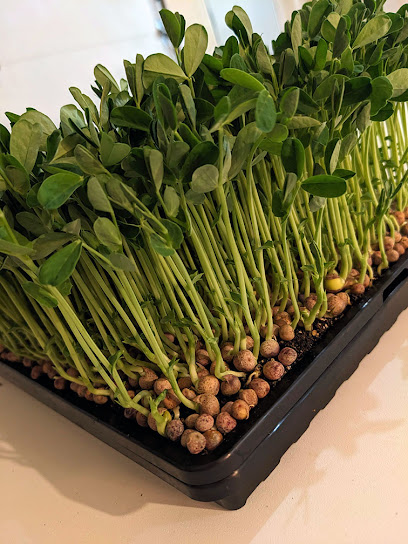
Local Microgreens Market in Bellingham
Bellingham’s microgreen market is currently anchored by two specialized growers who have shifted the focus toward a direct-to-consumer model. By bypassing traditional grocery supply chains, these farms ensure that delicate, nutrient-dense greens reach Bellingham households within hours of harvest. This hyper-local approach is vital in the Pacific Northwest, where the climate—defined by prolonged cloud cover and high humidity—limits traditional field agriculture for much of the year. Indoor vertical farming and hydroponic systems allow these growers to bypass seasonality, providing a consistent supply of vitamins regardless of outside temperatures.
Comparison of Top Growers
| Farm Name | Rating | Specialization | Type |
|---|
| MicroLife Gardens | 5 | Nutrient-dense microgreens | Farm |
| Nimbus Farm | 5 | Microgreen CSA/Delivery | Farm |
Deep Dive into Suppliers
MicroLife Gardens: Operated by a brother-sister duo, this urban farm focuses on small-batch, pesticide-free cultivation. Their direct-to-doorstep model minimizes transport time, which is critical for preserving the fragile cell structures of microgreens.
Nimbus Farm: This operation utilizes a CSA (Community Supported Agriculture) subscription model to stabilize production and demand. Their focus on Whatcom County residents ensures that the local food loop remains tight, reducing waste and increasing the efficiency of regional food distribution.
Buying Guide for WA Residents
Buying microgreens requires a different eye than selecting head lettuce or kale. Because these plants are harvested at the cotyledon stage—often just 7 to 14 days after germination—they possess higher concentrations of polyphenols and antioxidants than their mature counterparts. When purchasing in Bellingham, consider the following:
- Check the Stem Firmness: High-quality microgreens should stand upright. If the stems appear wilted or slimy, they have likely spent too much time in transit or were stored at an improper temperature.
- Moisture Control: The best greens are sold in breathable packaging. If there is visible condensation or water pooling at the bottom of the container, the product will degrade rapidly.
- Local Advantage: Washington residents benefit from indoor-grown produce because it is not exposed to the shipping stressors of long-haul logistics. Buying from local farms like MicroLife or Nimbus ensures that the nutrient density—often 4 to 40 times higher than mature plants—is preserved at the point of consumption.
- Variety Matters: Broccoli microgreens are the gold standard for sulforaphane content, while radish varieties offer a sharp, pungent flavor profile perfect for finishing soups or salads. Pea shoots provide a substantial crunch and are excellent for bulk consumption in smoothies.
The nutritional science behind this is clear: microgreens are essentially concentrated packets of plant energy. By integrating these into a daily diet, Bellingham residents can bridge the nutritional gap that often exists during the darker, colder months of the Pacific Northwest. Because these farms focus on the 'living' aspect of the produce, the enzyme activity remains active until the moment of consumption. When you choose a local CSA or home-delivery provider, you are not just buying food; you are investing in a shortened supply chain that prioritizes biological integrity over shelf-life stability.