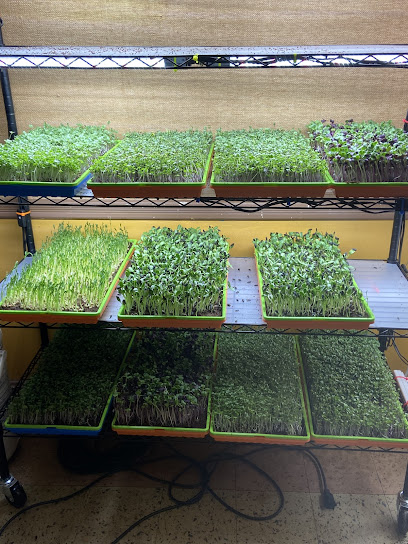
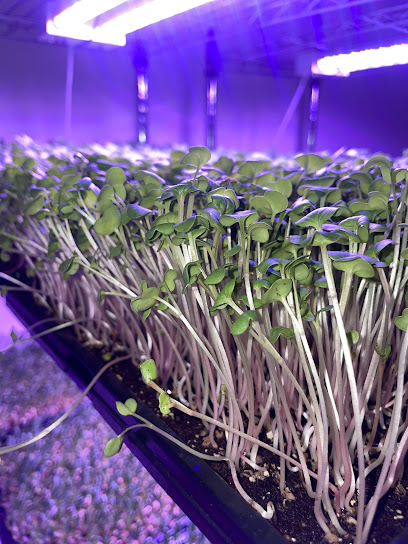
Microgreen Farms in Maryland

Explore 7 local microgreen producers across 7 cities.

Select your city:
Loading Map...

Top Rated Farms in MD

Fresh Source Farms LLC
💬 26 reviews5
Farm

Fresh Source Farms LLC

Urban Microgreens and Produce Farm. Top products: Microgreens, Fresh Produce. Fresh Source Farms LLC is an urban agricultural operation based in Elkton, Maryland, dedicated to the cultivation of high-quality microgreens and fresh produce. The farm utilizes an urban farming model to provide hyper-local greens to the surrounding community and professional culinary industry. Their business strategy focuses on a diversified distribution model, serving direct-to-consumer retail, local chefs, and wholesale partners. By maintaining a presence in the urban landscape, they minimize supply chain distances to ensure maximum freshness and nutritional density for their clients. The farm serves as a reliable source for high-end culinary ingredients, catering to both residential kitchens and commercial food service establishments.

📍1846 Pulaski Hwy, Havre De Grace, MD 21078
Route
Pure Microgreens LLC.
💬 7 reviews4.4
Health food store

Pure Microgreens LLC.

Hydroponic Microgreen Grower and DIY Kit Provider. Top products: Hydroponic microgreen growing kits, Microgreen seeds, Growing pads, Freshly harvested microgreens. Pure Microgreens LLC. is an established agricultural entity with a decade of experience specializing in the cultivation of microgreens. While historically focused on professional production, the company has expanded its operations to include hydroponic DIY kits designed for home growers, allowing for harvests in as little as nine days. Their business model serves both the direct-to-consumer home market and local commercial clients within the DC and Baltimore metropolitan areas. The company provides essential resupply materials, such as seeds and growing pads, to support ongoing home cultivation. Please note that the company has announced a cessation of operations, with the website scheduled to go offline on June 1st.

📍810 Manor House Dr, Upper Marlboro, MD 20774
Route
Maryland Microgreens
💬 6 reviews5
Vegetable wholesaler

Maryland Microgreens

Urban Aquaponic and Hydroponic Microgreen Farm. Top products: Pea Shoots, Wasabi Mustard, Broccoli, Arugula. Maryland Microgreens is an indoor vertical farm based in Monrovia, Maryland, specializing in the production of pesticide-free, living microgreens. Utilizing innovative aquaponic technology and recycled organic coconut fiber, the farm grows produce without soil or fertilizers, ensuring a pure and nutrient-dense product. They serve a diverse clientele including local restaurants, farmers markets, and individual consumers, emphasizing a farm-to-fork model where greens are delivered live with roots attached. By adhering to Good Agricultural Practices (GAP) and maintaining high standards learned from City-Hydro, the business ensures consistent quality and freshness. Their operational focus is on sustainability and providing high-quality, on-demand harvests that maintain peak nutritional value for their customers.

📍3091 Will Mill Terrace E, Monrovia, MD 21770
Route
Green Dragon Microfarm
💬 4 reviews5
Farm

Green Dragon Microfarm

📍Saint James, MD, 17903 Spielman Rd, Fairplay, MD 21733, USA
Route
No website listed
Farm Background Placeholder
B
💬 3 reviews5
Grocery delivery service

Big Dreams Microgreens

Indoor Climate-Controlled Microgreen Farm and Delivery Service. Top products: Pea Microgreens, Rambo Radish Microgreens, Sunflower Microgreens, Broccoli Microgreens. Big Dreams Microgreens is a Harford County, Maryland-based agricultural business specializing in the indoor, climate-controlled cultivation of pesticide-free microgreens. The farm operates on a grow-to-order model, ensuring that products are delivered within hours of harvest to maximize freshness and nutrient density. Their target market includes local households, restaurants, and catering kitchens, supported by flexible weekly or bi-weekly subscription options. By bypassing traditional retail supply chains, the business minimizes nutrient degradation and provides a streamlined, cost-effective service for their community. In addition to their core produce, they also offer a selection of health and wellness supplements.

📍2623 E Rhododendron Dr, Abingdon, MD 21009, USA
Route
Burt’s microgreens
💬 2 reviews5
Farm

Burt’s microgreens

📍1110 Kathryn Rd, Silver Spring, MD 20904
Route
No website listed
Eat Bright Greenery
Farm

Eat Bright Greenery

📍3030 Greenmount Ave Ste 300 PMB 559436, Baltimore, MD 21218
Route
No website listed

Browse by City

The Microgreens Market in Maryland

Maryland’s microgreen sector is currently transitioning from a cottage-industry hobby to a specialized logistics-driven market. While the state has a vast agricultural heritage rooted in Chesapeake Bay-adjacent row crops, the shift toward vertical farming and indoor controlled-environment agriculture (CEA) is gaining momentum. Current data confirms two primary verified operators: Big Dreams Microgreens and Eat Bright Greenery. These entities represent the two dominant business models in the state: direct-to-consumer grocery delivery and traditional small-scale farm production.

The market is defined by high demand from the Baltimore-Washington corridor. Consumers in these densely populated zones prioritize nutrient density and shelf-life, two areas where microgreens outperform traditional field-grown lettuce. Because microgreens are harvested at the cotyledon stage, they require minimal space but high technical oversight regarding humidity and light spectrum management. Maryland’s operators are increasingly adopting LED-based hydroponic systems to bypass the state’s humid summers, which often drive up mold risks in soil-based indoor setups.

Top Cities for Fresh Greens

Urban farming in Maryland is geographically concentrated in areas that balance population density with access to logistics infrastructure. Woodlawn and Edgewood have emerged as the primary hubs for current verified production. Woodlawn, situated near the Baltimore beltway, serves as an ideal base for operations like Big Dreams Microgreens. The proximity to major transit arteries allows for a streamlined grocery delivery model, ensuring that the short-lived greens maintain peak turgidity during transit.

Edgewood provides a different operational advantage. As an industrial-adjacent hub in Harford County, it allows for larger facility footprints compared to the high-rent districts closer to the city centers. Eat Bright Greenery utilizes this positioning to focus on farm-based production. The concentration of growers in these two cities suggests that Maryland’s urban agriculture sector is prioritizing "last-mile" efficiency over centralized, large-scale rural production. This localized approach minimizes the carbon footprint of transport, a key selling point for Maryland’s eco-conscious culinary scene.

Maryland Climate & Indoor Farming

Maryland experiences a humid subtropical climate, characterized by hot, humid summers and cool-to-cold winters. For traditional agriculture, this means a finite growing season. However, for microgreen producers, the climate is a primary driver for the adoption of indoor controlled-environment agriculture (CEA). High outdoor humidity levels in July and August pose a significant risk for fungal pathogens like Pythium and Botrytis, which can devastate delicate microgreen crops in non-climate-controlled spaces.

Indoor farming in Maryland relies heavily on HVAC dehumidification and HEPA-filtered air circulation. By decoupling production from the state’s erratic outdoor weather, Maryland growers can guarantee a 52-week supply of products such as radish, sunflower, and pea shoots. Furthermore, Maryland’s regulatory environment regarding water usage—particularly in the Chesapeake Bay watershed—favors hydroponic systems. These systems recirculate water, significantly reducing the nitrogen and phosphorus runoff associated with traditional field agriculture. This makes indoor vertical farming not just a business choice, but a regulatory-compliant strategy for sustainable growth in the state.

Sourcing Locally in MD

For restaurants, grocery buyers, and local residents looking to incorporate high-quality, fresh microgreens into their supply chain, the following strategies are recommended:

  • Direct-to-Consumer Subscriptions: Utilize delivery services like Big Dreams Microgreens. These services often provide "harvest-to-door" timelines under 24 hours, which is impossible for greens sourced through standard national distribution channels.
  • Farm-Direct Partnerships: Establish wholesale contracts with producers like Eat Bright Greenery. These agreements allow for custom crop selection, enabling chefs to request specific varieties like amaranth or cilantro microgreens that may not be available in standard markets.
  • Verification Checks: Always verify the facility’s sanitation protocols. Because microgreens are consumed raw, the risk of contamination is higher than with cooked produce. Maryland-based growers operating in urban hubs typically maintain transparent records of their water quality and substrate sterilization processes.
  • Seasonal Variety Planning: Communicate with local growers at least four weeks in advance to coordinate specific demand spikes, such as holidays or high-traffic culinary events, ensuring your supply remains consistent despite the intensive production cycle of microgreens.

Frequently Asked Questions

Q: Why is microgreen farming considered an urban activity in Maryland?

A: Microgreens require minimal square footage and can be grown in vertical racks. This allows farmers to operate in cities like Woodlawn and Edgewood, staying close to the customer base rather than needing large acreage in rural areas.

Q: How does Maryland's climate affect indoor microgreen production?

A: Maryland's high summer humidity makes outdoor or greenhouse growing difficult due to mold risks. Most successful Maryland farms utilize indoor, climate-controlled environments to maintain precise temperature and humidity levels year-round.

Q: What is the primary difference between the verified farms in Maryland?

A: Big Dreams Microgreens operates primarily as a grocery delivery service, focusing on logistics and direct consumer access, while Eat Bright Greenery functions as a farm, focusing on the production and cultivation side of the business.