

💬 3 reviews⭐ 3.3
maps_search
Vaughan Farm and Nursery LLC
📍848 E Glazypeau Rd, Hot Springs, AR 71909, USA
No website listed
Explore 79 local plant nurseries across 22 cities.

Native Arkansas plant nursery. Top products: Native Arkansas perennials, Native succulents, Native cacti. Hippy Certified is a specialty nursery focused on the cultivation and supply of native plants sourced from the Ouachita Mountains region of Arkansas. Their primary mission is to promote ecological restoration and sustainable gardening by providing plants that possess local genetics, ensuring superior adaptation to the region's specific soil, climate, and seasonal cycles. The business operates with an educational focus, providing resources and guides for homeowners and gardening enthusiasts to establish low-maintenance landscapes that support local pollinators and wildlife. By emphasizing the importance of regional biodiversity and the unique ecosystem of Arkansas shale glades, Hippy Certified functions as both a retail supplier and an advocate for native plant integration in residential and public landscaping. Their offerings cater to individuals looking to create resilient, environmentally harmonious gardens that work in synergy with the local landscape rather than against it.
 N
N P
P
Native Plant Specialty Nursery. Top products: Arkansas native plants, Perennials, Native seeds. Moonlit Heights Native Nursery is a dedicated horticultural operation located in Huntsville, Arkansas, specializing in the cultivation of native plants. The nursery distinguishes itself through a strong commitment to ecological integrity, utilizing seeds hand-collected from their local Ozark Eco-region or sourced from reputable regional dealers. Their growing methodology is strictly chemical-free, avoiding all synthetic pesticides, herbicides, and fertilizers to ensure the health of local pollinators and ecosystems. The business operates on a seasonal schedule from March through November, offering both appointment-based nursery visits and a presence at the Madison County Farmer's Market. They cater to environmentally conscious homeowners, native plant enthusiasts, and gardeners looking to support biodiversity through native landscaping. Services include plant sales, regional delivery options, and the provision of gift certificates. By focusing on site-specific ecotypes, Moonlit Heights emphasizes the preservation of local flora and sustainable plant propagation.
The Arkansas nursery and garden center landscape currently consists of 90 verified operations spread across 20 active cities. This distribution is not uniform; it concentrates in specific urban corridors that support both residential demand and regional commercial landscaping needs. The market is defined by a mix of specialized greenhouses and general retail garden centers that cater to the diverse needs of both casual home gardeners and professional horticulturalists.
Retailers like The Good Earth Garden Center and the various Westwood Gardens locations demonstrate the industry's focus on high-quality, regionally adapted stock. Customers now lean toward nurseries that provide specialized advice alongside plant sales. High-rated operations such as Sutherlands Home and Garden Club, which boasts a 4.9 rating, illustrate that consumer loyalty in Arkansas is tightly linked to plant health and knowledgeable staff. The market is characterized by a mix of long-standing family-owned nurseries and newer, niche-focused centers that prioritize rare or native varieties.
Hot Springs serves as a primary hub for this industry, housing 8 documented nurseries. This density correlates with the city's tourism-heavy economy and the specific microclimates found within the Ouachita Mountains, which necessitate a higher availability of specialized landscape materials. Similarly, Northwest Arkansas represents a critical cluster; Fayetteville and Bentonville both host 7 active centers each, while Rogers adds another 6. These three cities combined account for nearly 23% of the state's total nursery footprint, reflecting the rapid residential growth and high demand for residential landscaping in the NWA region.
Little Rock and Fort Smith anchor the central and western markets, maintaining 6 and 5 nurseries respectively. The consistency of these hubs suggests a well-distributed network that ensures homeowners across the state have access to climate-appropriate plant material without traveling across regional borders. Smaller but vital nodes like Paragould and Jonesboro maintain 4 nurseries each, ensuring that the agricultural and residential needs of the Delta region are serviced efficiently.
Arkansas spans USDA hardiness zones 6b through 8a. This climatic diversity means that a nursery in Northern Arkansas must stock cold-hardy perennials and woody shrubs capable of surviving hard freezes, while a garden center in Southern Arkansas focuses on heat-tolerant species that thrive in long, humid summers. The state's soil geography—ranging from the rich alluvial soils of the Mississippi Delta to the rocky, acidic substrates of the Ozarks—dictates what local growers can produce field-grown versus what must be container-grown in greenhouses.
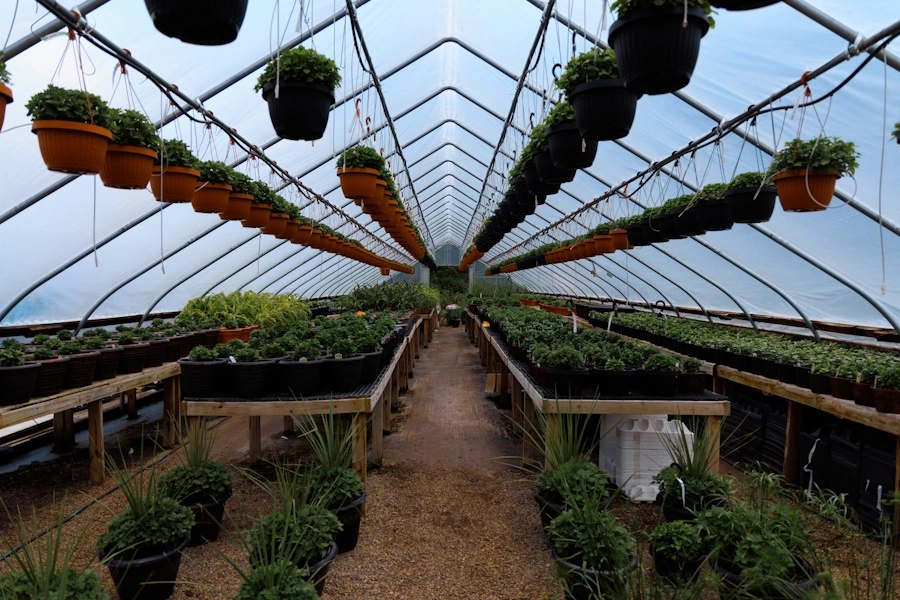
Native plants are the backbone of successful gardening in Arkansas. Nurseries are increasingly pivoting to inventory species like Arkansas Bluestar (Amsonia hubrichtii) and various native oak species, which are naturally adapted to the state’s fluctuating precipitation levels. Average annual rainfall is generally high, but uneven distribution necessitates the sale of drought-tolerant plants that can handle the dry spells common in late summer. Greenhouse-grown stock is essential here; starting plants under controlled conditions protects them from the intense early-spring temperature swings that can kill fragile nursery inventory before it ever hits the sales floor.
A: For most of Arkansas, the optimal time for planting shrubs is in the fall, specifically from late September through November. This window allows roots to establish in the cooling soil before the high heat of the following summer. In the northern zones, spring planting is also effective once the ground has thawed, but fall remains the gold standard for reducing plant stress.
A: Arkansas gardeners face significant temperature swings, particularly in the spring, which can fluctuate by 30 degrees in 24 hours. These rapid changes, combined with high humidity in the summer and varying soil acidity from the Ozarks to the Delta, make plant selection difficult. Nurseries must stock inventory that can handle both the winter freezes of zone 6 and the intense, humid heat of zone 8.
A: Yes, there is a growing trend among top-tier Arkansas garden centers to stock native species. Plants like Arkansas Bluestar, native coreopsis, and oak varieties are becoming staples. If you cannot find a specific native plant at a general nursery, look for specialized greenhouse operations that focus on pollinator-friendly restoration landscapes, as they are more likely to carry species endemic to the Ouachita or Ozark regions.
A: Arkansas ranges from 6b in the mountainous north to 8a in the southern corners. You can check your specific county’s hardiness zone on the USDA map. When purchasing from a nursery in a different part of the state, ask the staff if the plant was grown in that specific zone to avoid purchasing specimens that will not survive your local winter temperatures.
A: Container-grown plants are easier to transplant and available year-round, which is why most garden centers carry them. Field-grown or 'balled and burlapped' plants are typically larger and better for mature landscape trees. In Arkansas, container-grown plants are safer for beginners because the root systems are better protected from the volatile, wet-dry cycles common in the state’s clay-heavy soils.